

Women in STEM Dialogue: Gender and Energy Perspectives from Mongolia and Taiwan
WSTEM Mongolia in Electrical Engineering & renewable energy --Transnational dialogue from a gender perspective
Date: June 19, 2025, 3:00–5:00 p.m.
Venue: Fembooks
Co-organizers: International Network of Women Engineers and Scientists (INWES) and Women Engineers Committee of the Chinese Institute of Engineers
Supported by: National Science and Technology Council (NSTC)

Cross-Border Dialogue on Women in STEM: Gender Equality and Energy
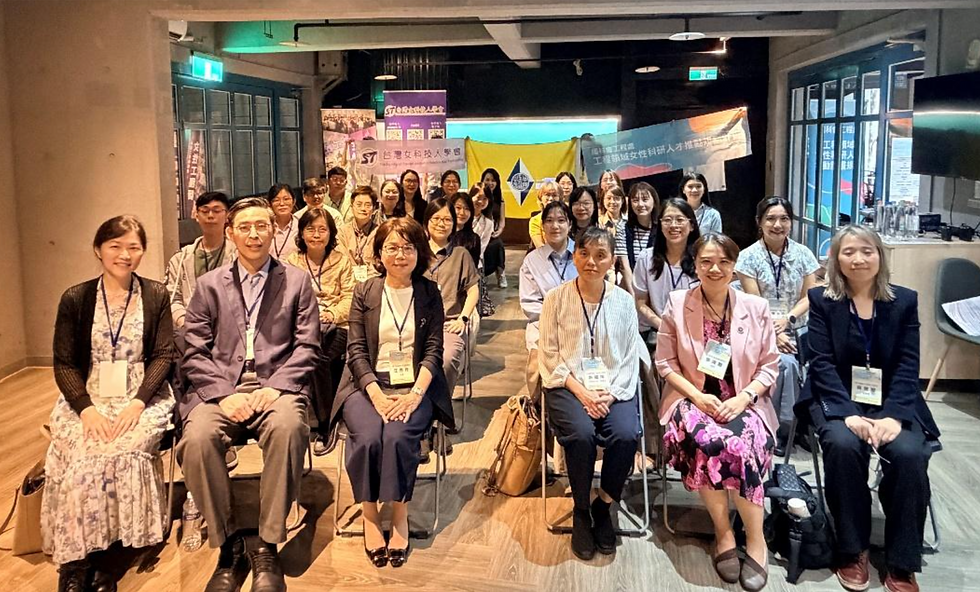
During Dr. Ariunbolor Purvee’s visit to Taiwan for the 2025 IEEE IAS Annual Meeting, TWiST organized this forum to examine gender development in Mongolia’s engineering and energy sectors and promote cross-border dialogue between Mongolia and Taiwan through a gender perspective.
Moderator
Shun-Lien Song | TWiST Supervisor and INWES Vice President (Conferences)
Panelists
Ya-Yu Chiang | Vice Chair, CIE Women Engineers Committee (CIE-WEN)
Shu-Te Huang | Board Member, Green Advocates Energy Cooperative
Ariunbolor Purvee | President, Women in Science, Technology, Engineering and Mathematics Mongolia (WSTEM Mongolia)
Mongolia’s Energy Challenges: From Coal Dependence to Renewable Energy
Dr. Ariunbolor Purvee, who teaches at the Mongolian University of Science and Technology and the German-Mongolian Institute for Resources and Technology, began by introducing Mongolia’s geography and population. The country is approximately 43 times the size of Taiwan but has a population of only around 3.5 million. Winter temperatures can fall as low as −30°C. Like Taiwan, Mongolia has widespread higher education and a high literacy rate, and it is working to improve the quality of its universities.
She explained that Mongolia’s energy system depends heavily on coal-fired power plants, which provide electricity and heating to urban areas—particularly in the extremely cold capital, Ulaanbaatar. Despite the country’s abundant coal reserves, renewable energy accounts for only about 10% of total energy consumption. Difficulties in distributing electricity across the grid, incompatible equipment caused by differing standards, and severe air pollution present major challenges to the country’s energy transition.
Dr. Purvee emphasized that Mongolia’s energy reform will require technical expertise, workforce development, and political commitment. She also proposed practical measures, including documenting electricity-distribution challenges, developing renewable-energy demonstration projects, and promoting energy conservation and electrical-safety education in both urban and rural communities.

Women-Led Social Action in Taiwan: Advancing the Nuclear Phase-Out and Energy Democracy
Board Member Shu-Te Huang then shared the history of women’s participation in social movements and Taiwan’s energy transition. In May 2025, Taiwan shut down its final operating nuclear power unit, marking a new stage in its transition toward a nuclear-free homeland.
Since the late 1980s, the Homemakers United movement—now represented by the Homemakers United Foundation—has actively promoted environmental protection and educational reform. Its initiatives have included green consumption, non-genetically modified food, collective purchasing, and resource recycling. These women-led efforts helped lay the foundation for sustainable communities and energy democracy in Taiwan.

Community Resilience Through Food and Energy: Women-Led Cooperatives in Action
Following a series of food-safety crises after 1993, the Homemakers Union established the Homemakers Union Consumers Co-op. Using collective purchasing power, the cooperative supports small-scale farmers and builds fair, mutually beneficial producer networks. Members regularly visit farms, organize face-to-face discussions, and even provide emergency financial assistance when farmers encounter difficulties.
The cooperative advocates reducing pesticide use and food additives, promoting non-genetically modified food, and supporting local production and consumption, except for fair-trade products. In 1999, the Taiwanese cooperative formed a sister cooperative alliance with Happy Co-op in South Korea and Seikatsu Club in Japan to facilitate international knowledge exchange.
Following the Fukushima nuclear disaster in 2012, the three organizations signed a Nuclear-Free Declaration, committing themselves to developing alternative energy sources and building a sustainable society.
Taiwan’s First Citizen-Led Renewable Energy Cooperative
In 2016, Ms. Huang helped establish the Green Advocates Energy Cooperative, Taiwan’s first citizen-initiated renewable energy cooperative. Through community investment, rooftop leasing, and the installation of rooftop solar systems, ordinary citizens can become co-producers of renewable electricity.
In 2020, the cooperative launched its Citizen RE100 initiative, encouraging individuals to support carbon reduction through solar energy. By 2025, it had grown to 383 individual members—67% of whom were women—and three institutional members, demonstrating women’s active participation and influence in energy governance.
Women Engineers and Sustainable Approaches to Green Manufacturing
Ya-Yu Chiang, Associate Professor in the Department of Mechanical Engineering at National Taiwan University and Vice Chair of the CIE Women Engineers Committee, shared her academic background and research experience in engineering, along with her insights into the intersection of technology and social issues.

She noted that in 2016, she participated in the “30th Anniversary of the Chernobyl Nuclear Disaster” documentation project. She conducted in-depth interviews with residents still living in the Chernobyl region, recording their experiences and observations of the local environment. These firsthand accounts were transformed into exhibition content for “Fragments of Truth,” a multimedia photography exhibition held in Taiwan. The project helped Taiwanese audiences understand the lasting effects of the nuclear disaster from a humanistic perspective while demonstrating the potential of integrating technological research with social narratives.
Associate Professor Chiang emphasized that an engineering background should not be limited to technological development but should also encompass environmental sustainability and social responsibility. Within the mechanical engineering academic community, she has observed a growing number of women professors conducting research in green manufacturing, carbon reduction, and sustainable technologies. This trend shows that women engineers are becoming an increasingly important force in academia and practice, combining critical awareness with action-oriented approaches and bringing more diverse perspectives to engineering education and sustainable development.
Gender Diversity and Institutional Change in STEM Higher Education
Dr. Chiang also discussed gender equality in higher education. Women currently account for approximately 20% of the faculty in National Taiwan University’s Department of Mechanical Engineering—a proportion higher than that of many engineering departments internationally. She attributed this progress to institutional support, greater gender awareness, and the department’s values and culture.
Participants noted that many Asian countries still lag behind in this area. Dr. Chiang recalled observing international academic delegations in which engineering faculties from South Korea included almost no women. She emphasized that academic institutions should consider gender balance in recruitment and promotion alongside research funding and academic competitiveness. Doing so is essential to achieving genuine diversity of perspectives and greater equity in knowledge production.
International Cooperation for Energy Transition and Gender Equality
The forum concluded with a lively question-and-answer session. Panelists and Mongolian doctoral students discussed why the proportion of women scientists in Mongolia has declined from its previous level of 40%, as well as issues involving single mothers and the intersection of gender with the rare-earth industry.
The dialogue demonstrated how gender perspectives and scientific expertise can cross national borders and create meaningful change in addressing global challenges such as energy justice, sustainable development, and academic diversity. From Mongolia’s need for energy transition to Taiwan’s experience in social innovation and women’s participation, international cooperation will remain an essential driving force for future progress.


Comments